
Justin McKelvey
Ran snowboard shops. Taught myself to code. Now I build AI that does real work.
ChatGPT Ads Cost (2026): $25 a Day Minimum, Who Actually Sees Them, and When AI Search Visibility Is the Better Buy
The short answer
ChatGPT ads cost at least $25 a day in the US, and OpenAI suggests starting click campaigns at $3 to $5 a click. Run at the minimum for a month and you spend about $760 for roughly 150 to 250 clicks. Before you spend it, know who you're buying: OpenAI shows ads only to people on the Free and Go plans. Anyone on Plus, Pro or a Business seat never sees them, which matters a lot if your buyers are other businesses.
Every "ChatGPT ads guide" this month is written by an agency that wants to run your campaign. Here is what OpenAI's own help center says, the math it doesn't do for you, and how I'd decide.
What OpenAI charges, from its own help center
| Item | What OpenAI says (read October 5, 2026) |
|---|---|
| Minimum daily budget | $25 (USD accounts). €15, £15, C$25, A$25 |
| How the daily budget works | An average over a Sunday-to-Saturday week. One day can spend up to 2x; the week caps at 7x |
| Ways to buy | Views (pay per 1,000 impressions), Clicks (pay per valid click), Conversions (still billed per click or per 1,000 impressions, never per conversion) |
| Suggested starting bid | "$3–$5 USD per click" for click campaigns |
| Auction | Relevance-weighted, second-price |
| Targeting | Context hints (not exact-match keywords), countries, and for most campaigns states, cities and postal codes |
| Custom audiences | At least 25,000 matched users to include one |
| New-advertiser offer | $500 in ad credit when you spend $500 (ads.openai.com) |
One reporting detail to know before your first week: spend in Ads Manager can lag 7 to 8 hours, so a zero on the dashboard doesn't mean nothing has been charged.
One-time · $29
Find out if ChatGPT recommends you, or your competitor.
- The 25-query worksheet that finds your money queries
- The 4-week tracking spreadsheet: query × engine × cited?
- The 15-action fix checklist, ranked by impact
Instant access. Your link lands on the next screen and in your email.
The math at the minimum
OpenAI gives you the floor and a starting bid. Multiply them out and a small business's first month looks like this:
| At $3 a click | At $5 a click | |
|---|---|---|
| Daily budget | $25 | $25 |
| Clicks a day (average) | about 8 | 5 |
| Most you can spend in one week | $175 | $175 |
| A full month (~30.4 days) | about $760 | about $760 |
| Clicks a month | about 250 | about 150 |
| Leads at a 2% landing-page conversion rate | about 5 ($150 each) | about 3 ($250 each) |
The 2% is an assumption, not an OpenAI number. I picked it because it's close to what I measure on my own site: over 90 days to August 28, 2026, visitors who arrived from ChatGPT, Claude or Perplexity answers converted at 1.96%, against 0.37% for the site overall. Those were organic visitors, not ad clicks, so treat it as a ceiling to test against, not a promise. If your offer converts at 1%, double the cost per lead.
The $500 credit helps the first month. It doesn't change the per-lead math once it runs out.
The catch: who never sees your ad
OpenAI's help center is direct about it: ads may appear for users on the Free and Go plans, and "Plus, Pro, Business, Enterprise, and Edu accounts will not have ads." Free users can also turn ads off in exchange for lower message limits.
Think about who that leaves out. An operations manager comparing vendors on the company's ChatGPT Business seat won't see your ad. Neither will the owner paying $20 a month for Plus. If you sell to businesses, the people with budgets are disproportionately the people on paid plans. If you sell to consumers (a med spa, a roofer, a dentist, a moving company), Free and Go is a huge audience and the cut matters much less. The Go plan is the cheap paid tier that still sees ads; what it includes is in is ChatGPT Go worth it.
Ads sit under the answer. They don't change it.
OpenAI says ads are labeled, appear below the response, and "advertising does not influence the answers ChatGPT provides." So there are two ways to show up when someone asks ChatGPT who to hire:
- Paid: a labeled card under the answer, for Free and Go users, for as long as you keep paying.
- Organic: your name inside the answer itself, for every user on every plan, including Business seats. That depends on what ChatGPT can find and trust about you on the web, which is the whole subject of how to get cited by ChatGPT.
Organic isn't free. It takes pages that answer the questions buyers actually type, and it takes months. But it compounds, and it's the only way to reach the paid-seat buyer. The groundwork is in my AI visibility guide, and the page-level tactics are in ChatGPT SEO.
Want the checklist version of this? The free 12-point AI Discoverability Checklist: the self-audit for whether ChatGPT, Perplexity, and Google AI can find and cite your site.
Free. One email, no drip campaign ambush. One-click unsubscribe.
When I'd test ChatGPT ads, and when I wouldn't
I'm not anti-ads. I'm anti-ads-that-nobody-measures. When I killed my Meta ads on September 1, "one ad ate 99% of the spend while the other two got 30 impressions apiece." Nobody had looked closely enough to notice. Here's how I'd decide on ChatGPT:
- Test it if your buyers are consumers or owner-operators who use ChatGPT on the free plan, you have a landing page with one clear ask, and you can track a lead back to the click (UTM parameters work; OpenAI's Basics article says they persist on ad clicks).
- Test it if you serve one city. Postal-code targeting at $25 a day is a cheap experiment for a local service business.
- Skip it, for now, if you sell to companies and your buyer is a manager or executive at work. They're on paid seats. Put the money into being the business ChatGPT names.
- Skip it if you can't measure it. A campaign you can't trace to a lead is a donation.
A clean test is two weeks at the minimum: about $350, a single ad group, one landing page, UTM tags on every link, and a number you decided in advance (cost per lead) that makes it a keep or a kill. OpenAI's own early-results claim is that WeightWatchers' attributed cost per acquisition came in 15.3% below its blended paid-search benchmark, as reported by its measurement partner. That's one large brand, not a small business benchmark.
What's new this month
On October 5, 2026, OpenAI announced a visual ad format that shows images of products in use, tested first during image generation in ChatGPT, starting later in October in the US with an initial group of advertisers. It also added conversion integrations (Hightouch, Tealium, LiveRamp) and a long list of attribution partners, and it is piloting brand-suitability checks with DoubleVerify and Integral Ad Science. For a small advertiser, the practical change is better measurement, not a cheaper price: the $25 floor and the $3 to $5 guidance are unchanged.
Ads are one of two ways ChatGPT fits into a marketing plan; the other is using it to do the marketing work itself. Both, side by side with what each costs, are in ChatGPT for marketing.
What to do today
Before spending anything, ask ChatGPT the question your best customer would ask ("who's the best [your service] in [your city]?") on a free account and on a paid one. If you're not in either answer, the ad only fixes one of those, and only while you pay. If you want the full picture across ChatGPT, Claude, Perplexity and Google's AI answers, with the fixes in order, that's my AI search audit.
Sources
- OpenAI Help Center, "Ads in ChatGPT: The Basics", help.openai.com/en/articles/20001207-ads-in-chatgpt-the-basics (read October 5, 2026)
- OpenAI Help Center, "Create Campaigns for ChatGPT Ads" (Minimum Campaign Spend table), help.openai.com/en/articles/20001210-create-campaigns-for-chatgpt (read October 5, 2026)
- OpenAI Help Center, "Daily Budgets", help.openai.com/en/articles/20001413-daily-budgets (read October 5, 2026)
- OpenAI Help Center, "Ads in ChatGPT", help.openai.com/en/articles/20001047-ads-in-chatgpt (read October 5, 2026)
- OpenAI, "Advertise in ChatGPT", ads.openai.com (read October 5, 2026)
- OpenAI, "Building advertising for the way people use AI", October 5, 2026, openai.com/index/new-chatgpt-ads-format-and-measurement (read October 5, 2026)
- justinmckelvey.com PostHog data, AI-referred visitor conversion, 90 days to August 28, 2026
What does AI say about your business?
I'll run your domain through the citation checker I use on client work: where AI engines mention you, and the 3 fixes that matter most.
Get my free visibility reportFrequently Asked Questions
- How much do ChatGPT ads cost?
- As of October 5, 2026, OpenAI's help center lists a $25 minimum daily budget for US-dollar ad accounts and recommends starting click campaigns at a maximum bid of $3 to $5 per click. You can also buy on a cost-per-thousand-impressions basis. At the minimum, a campaign that runs all month spends about $760, which buys roughly 150 to 250 clicks at those starting bids.
- Is there a minimum spend for ChatGPT ads?
- Yes. The minimum daily budget is $25 in the US (15 in euros or pounds, 25 in Canadian or Australian dollars). The daily budget is an average over a seven-day week: one day can spend up to twice the budget, and the week can't exceed seven times it. New advertisers get a $500 ad credit after spending $500, per ads.openai.com.
- Who sees ads in ChatGPT?
- Only users on the Free and Go plans, in regions where ads are running. OpenAI says Plus, Pro, Business, Enterprise and Edu accounts never see ads, and neither do accounts it identifies as under 18. Free users can also switch ads off in exchange for lower message limits.
- Do ChatGPT ads make ChatGPT recommend my business?
- No. OpenAI says ads appear below the answer, are labeled, and do not influence what ChatGPT says. Being named inside the answer is the organic side, and it depends on what the model can find and trust about you on the web.
- Can a local business target its city with ChatGPT ads?
- Yes, for standard campaigns. OpenAI's campaign guide says you can target states, cities, markets and postal codes where available, on top of country targeting. Product-feed campaigns are country-level only. Custom audiences are harder: including one requires at least 25,000 matched users, which rules out most small businesses' customer lists.
- How do I start advertising on ChatGPT?
- Sign up at ads.openai.com, which takes you into Ads Manager to create the account, a campaign (objective, budget, dates, locations), ad groups with context hints, and the ads themselves. Context hints describe the conversations you want to appear near; OpenAI says they are not exact-match keywords and don't guarantee delivery.
More on AI Visibility
12% of Our Google Impressions Were 8-Word Prompts. They Got 10 Clicks Out of 842.
We split two months of Google Search Console data by query length. Queries of eight words or more were 12% of our impressions, ranked better than our short queries, and got 10 of 842 clicks. Here is the data, the method, and the two-minute filter that shows you the same split on your own site.
GEO vs SEO: What's Actually Different (and What Isn't)
GEO (generative engine optimization) and SEO share about 90% of their tactics — the acronym war is mostly a marketing invention. But the 10% that differs is the part that decides whether an AI engine quotes you or ignores you. Here's the honest split: what carries over, the four things that genuinely change, and how to tell which one is failing you.
What Is llms.txt? The Honest Answer From Someone Who Ships One
llms.txt is a proposed standard — a markdown file at your site root that hands AI engines a curated map of your content. Mine is live and auto-generated. Here's what the file actually is, the 15 minutes it takes to ship one, and the honest evidence on whether any AI engine reads it — which is thinner than the people selling you AEO packages admit.
ChatGPT SEO: What It Actually Means in 2026 (Both Definitions)
"ChatGPT SEO" is two completely different jobs wearing one name: using ChatGPT to do SEO work, and doing SEO so ChatGPT recommends you. Four times more people ask AI assistants about it than ask Google. I do both jobs for a living — here's what each one actually involves, which one your business needs, and the data on what ChatGPT really cites.
Written by
Justin McKelvey
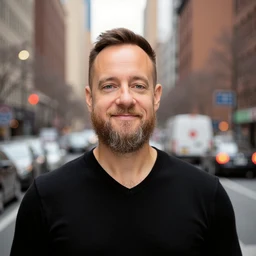
I spent 12 years running snowboard and mountain-bike shops in Colorado, then taught myself to code. Since then: 50+ products shipped, Head of Product at a national sports platform, CTO at an AI startup. Now I put AI to work in real businesses in Austin, TX and remote, and write down what actually works.
Work with meWant more help? Get your free AI visibility report · Book a strategy call
Before you go
Find out what AI says about your business.
Free personalized report: where ChatGPT and Perplexity mention you, where they recommend competitors instead, and the 3 fixes that matter most.
Get my free visibility report →The AI Visibility Starter: the DIY kit for getting recommended by ChatGPT.
Get started →